
THE HISTORY DISPATCH - A Weekly History Newsletter - Post 0001 - 20 October 2026
Your weekly dispatch from the past - The latest history news, fascinating articles, remarkable discoveries and documentaries worth watching.
Kevin
10/20/202627 min read
Welcome to the inaugural edition of The History Dispatch, a new weekly newsletter dedicated to exploring the latest news, discoveries and developments from the fascinating world of history. From archaeological finds that shed fresh light on ancient civilisations to historical mysteries that continue to puzzle researchers, the aim is to bring together some of the most interesting history-related stories from across the web in one convenient place.
History has a habit of reminding us that the past is never quite as settled as we might think. New discoveries can challenge long-held assumptions, overlooked documents can transform our understanding of familiar events, and advances in scientific techniques can reveal secrets that have remained hidden for centuries. Sometimes, all it takes is an archaeological excavation, a closer examination of an old artefact or a fresh interpretation of the evidence to change the story we thought we knew.
That is part of what makes following history so rewarding. It is not simply about memorising dates, remembering who won which battle or attempting to recall the order of succession of a particularly complicated royal dynasty. It is about understanding how people lived, what they believed, how societies developed, and why events unfolded as they did. It is also about recognising that the historical record is incomplete. For every question that researchers answer, there always seems to be another waiting patiently in the queue.
The History Dispatch aims to capture some of that excitement by curating a selection of history-related material published online during the week. The emphasis will be on recent news articles, archaeological discoveries, historical research, interesting features and developments in our understanding of the past. Where appropriate, I will also highlight documentaries, YouTube videos and other worthwhile viewing for readers who prefer their history accompanied by moving pictures rather than footnotes.
The newsletter will be primarily curated rather than an entirely original publication. In other words, I will do the searching, sorting and selecting, bringing together material from a range of sources so that you do not have to spend hours trawling the internet yourself. Each selected story will include a link to the original article or source, accompanied by a short commentary explaining what has been discovered, the historical background, and why the story deserves attention. The intention is not merely to reproduce headlines, but to provide enough context to make each item meaningful and, hopefully, encourage further reading.
There is certainly no shortage of material. Archaeologists are uncovering evidence of ancient settlements, shipwrecks and everyday life; historians continue to reassess familiar events; museums and archives are making new collections accessible; and researchers are using technologies that would have seemed extraordinary only a generation ago. Meanwhile, historical documentaries bring these subjects to a wider audience, sometimes illuminating a forgotten episode and sometimes prompting us to ask whether the latest television revelation is quite as conclusive as its dramatic soundtrack suggests.
That last point is worth remembering. Exciting discoveries do not always produce immediate answers. An object found in an excavation may have several possible uses, an apparent historical connection may remain unproven, and an intriguing theory may require considerably more evidence before it can be accepted. Where the evidence is uncertain, I will endeavour to distinguish between what researchers have established and what they merely suspect. After all, history is interesting enough without turning every intriguing fragment into a lost civilisation or every unusual artefact into an ancient technological wonder.
This first edition concentrates largely on archaeology and recent discoveries, with stories ranging from Roman shipwrecks and buried treasure to ancient Egyptian burial practices and a possible Roman military site in Wales. There is also a reminder that the past is not always safely tucked away in museums: historical sites can be affected by modern warfare, environmental change and difficult decisions about conservation. And, as ever, a famous historical mystery continues to attract attention, demonstrating that some questions remain stubbornly resistant to a definitive answer.
As this is the first issue, the newsletter will inevitably evolve over the coming weeks. I expect to make adjustments to the selection of stories, the balance between written articles and video content, and the format of individual editions as the project develops. Suggestions and feedback will be welcome, particularly from readers with favourite historical subjects or sources that deserve a wider audience.
For now, the plan is straightforward: The History Dispatch will be published on my website blog each week, so please drop by regularly to see what is new. In time, I hope to establish a mailing list so that future editions can arrive directly in your inbox, sparing you the arduous expedition of finding the website yourself.
Thank you for joining me at the beginning of this little historical adventure. I hope you find something here that informs, surprises or inspires you to investigate a subject further. Whether your interests lie in the ancient world, medieval kingdoms, modern conflicts or the occasional historical mystery, there should be something to pique your curiosity.
So, without further ado, let us see what the past has been up to lately. It seems it has been rather busy.
Download: PDF Version
Archaeology and Recent Discoveries
1. Roman shipwreck carrying around 500 amphorae discovered off Sicily
Read more: The Guardian — Roman shipwreck with 500 amphorae found off coast of Sicily
The Mediterranean has long been one of the world's great highways of trade, connecting communities, empires and cultures across three continents. A remarkable discovery off the coast of Sicily provides another glimpse into this busy maritime world: a Roman shipwreck estimated to be around 2,100 years old, carrying approximately 500 ceramic containers known as amphorae.
The vessel was discovered about three miles off Mazara del Vallo, on Sicily's western coast, resting at a depth of approximately 46 metres. Italian authorities investigated the site with the assistance of divers and underwater cameras after receiving information from local fishers. Measuring roughly 21 metres long, the ship offers an unusually valuable opportunity to investigate ancient commercial activity.
Amphorae were used extensively throughout the ancient Mediterranean to transport goods, including wine, olive oil and other commodities. The containers found aboard this particular vessel are predominantly of the Dressel 1A type, widely associated with wine transportation during the second and first centuries BC. Their form, manufacture and distribution can help archaeologists reconstruct trading networks and identify connections between producing regions and distant markets.
The cargo is particularly interesting because it represents more than a collection of old pottery. A shipwreck can preserve evidence of trade at a particular moment, potentially revealing what merchants were carrying, where goods originated and how they moved around the Mediterranean. The loss of a ship that might otherwise have disappeared from the historical record can therefore become an unexpected gift to modern researchers.
Sicily occupied a strategic position between Italy, North Africa, Greece and the eastern Mediterranean. Its surrounding waters witnessed centuries of commercial exchange, military movements and cultural contact. Other Roman wrecks discovered nearby demonstrate how much archaeological evidence remains beneath the sea.
Further research is expected to establish a more precise date for the vessel, investigate the origins and intended destination of its cargo, and determine how best to protect the site. There is also a practical challenge: underwater archaeological sites can be vulnerable to looting and disturbance.
For now, this discovery offers an intriguing snapshot of Roman commerce. Somewhere in the ancient Mediterranean, a merchant's carefully loaded cargo never reached its destination. Two millennia later, archaeologists are finally getting the chance to inspect the delivery.
2. Amateur archaeologist discovers 934 Roman silver coins in Germany
Read more: The Guardian — Amateur archaeologist finds 934 Roman silver denarii in German field
Sometimes archaeological discoveries begin with an elaborate research programme, specialist equipment and years of painstaking excavation. On other occasions, they begin with a metal detector producing a persistent signal in a field. That was how an amateur archaeologist, Oliver Riedl, came across a remarkable hoard of 934 Roman silver coins near Wesseling, south of Cologne, in western Germany.
Riedl initially discovered several coins but realised that the detector was signalling something much larger beneath the soil. Sensibly, he contacted the authorities rather than attempting to recover the entire collection himself. Archaeologists subsequently excavated the site and recovered the hoard, which weighs approximately 3.1 kilograms. It is regarded as the largest coin hoard found in Germany from the reign of the Roman emperor Hadrian.
The coins were probably buried during the second quarter of the second century AD, when Hadrian ruled the Roman Empire from AD 117 to 138. Hadrian is remembered for consolidating imperial frontiers, travelling extensively throughout the empire and commissioning the famous wall in northern Britain that bears his name. The hoard's precise relationship to his reign and the circumstances of its burial will be important subjects for further study.
Why would someone bury so much money? The most straightforward explanation is that the owner wanted to keep it safe. Ancient Romans did not have modern banking services, and hiding valuable possessions could be a practical means of protecting wealth. The more intriguing question is why the coins were never recovered. Perhaps the owner died, was displaced or was otherwise prevented from returning to the hiding place. Unfortunately, the evidence may never provide a definitive answer.
The collection also gives us a useful sense of the value of money in the Roman world. Archaeologists estimate that an ordinary legionary earned about 300 denarii annually, although deductions were made for food and equipment. According to researchers, accumulating a hoard of this size would have required a soldier to save all his disposable income for roughly six years.
The discovery is a reminder that coins can tell us much more than their monetary value. Their dates, inscriptions and distribution can illuminate economic activity, political authority and patterns of settlement. The Cologne region formed part of Rome's frontier world along the Rhine, where military, civilian and commercial life intersected.
One mystery remains: whose savings were these, and what prevented their owner from returning? The coins have survived remarkably well, but their original owner left no forwarding address.
3. Roman finds reveal everyday life beneath Bath's Georgian streets
Read more: The Guardian — Glimpses into lives of Roman suburbanites in Bath revealed in rare finds
Bath is famous for its Roman baths, elegant Georgian architecture and association with Jane Austen. Recent archaeological discoveries beneath the city's Bath Assembly Rooms, however, have revealed another layer of its long history: evidence of ordinary people who lived and worked in the Roman settlement beyond its celebrated bathing complex.
The discoveries emerged during restoration work at the eighteenth-century building, which was once a fashionable meeting place for dancing, socialising, drinking coffee and gambling. Beneath the floor, archaeologists uncovered Roman ditches containing pottery, coins, glassware, animal bones, roof tiles and fragments of a military helmet. A small limestone piece that may have belonged to a mosaic was also found, alongside a Roman bone pin that could have been used as a hairpin or clothing fastener.
These objects may not have the immediate glamour of a royal tomb or a spectacular gold treasure, but they offer something equally valuable: clues to everyday life. Pottery and glassware suggest domestic activity and consumption, while personal accessories help us imagine how people dressed and presented themselves. Animal bones can provide information about diet and food supply, and construction materials can reveal something about buildings and settlement patterns.
The finds are especially significant because archaeologists have relatively limited evidence for Roman occupation in this northern part of Bath. The city was known in Roman times as Aquae Sulis, named after the goddess Sulis, whose worship became associated with the mineral-rich hot springs. The baths attracted visitors seeking healing, while a wider settlement developed around the complex.
The new evidence suggests that the inhabited area extended further than previously established and that more remains may survive beneath neighbouring streets and buildings. This is an important point: the ancient city is not confined to the famous ruins that visitors see today. Much of its history remains concealed beneath the modern urban landscape.
The survival of the Roman deposits is partly due to the relatively shallow foundations of the Georgian Assembly Rooms. In an unexpected twist, the construction methods of the eighteenth century helped preserve material for archaeologists working more than two centuries later.
Researchers believe this area may have been home to people engaged in everyday occupations, perhaps supplying pottery, bread and other necessities to the wider community. In other words, the people who lived here were not necessarily wealthy elites but residents whose work kept the city functioning.
The discoveries offer a welcome reminder that history is made by ordinary people as well as emperors, generals and famous writers. Sometimes, the smallest objects tell us the most about how a society actually worked.
4. Ancient wall beneath Paris may help identify the city's earliest settlement
Read more: The Guardian — Ancient wall found beneath Paris could confirm site of first settlement
Paris may be one of the world's most recognisable cities, but the precise location and development of its earliest settlement remain subjects of archaeological debate. A newly discovered stretch of ancient wall beneath the Île de la Cité, close to Notre Dame Cathedral, could help clarify the origins of the city once known as Lutetia.
The approximately 20-metre section of stone-and-wood structure was uncovered during excavations beneath the Hôtel-Dieu hospital. Archaeologists believe it may have formed part of the defensive ramparts of the settlement associated with the Parisii, a Gallic people who inhabited the region before and during the Roman conquest.
The discovery matters because the Île de la Cité has traditionally been considered the centre of ancient Lutetia. However, some researchers have argued that the original settlement may instead have been located at Nanterre, to the west of modern Paris. The newly uncovered wall could provide important evidence in this longstanding debate, although its precise function and date still require confirmation.
Dating evidence places the charred material associated with the structure between approximately 200 BC and 10 BC. This period includes Julius Caesar's campaign in Gaul and the Battle of Lutetia in 52 BC. According to Caesar's account, the local population set fire to its settlement before the Roman forces arrived, potentially explaining traces of burning identified at the site.
It is important, however, not to leap from a promising discovery to a definitive conclusion. The wall's date, construction and archaeological context must be considered together before researchers can establish whether it really belonged to the settlement described in ancient sources. A physical structure that fits a historical account can strengthen a theory, but it does not automatically prove every detail of that account.
The discovery also illustrates the complicated relationship between ancient and modern cities. Paris has been continuously developed and rebuilt over many centuries, meaning that evidence of earlier settlements can survive beneath hospitals, streets, churches and other buildings. Archaeologists must often work within the constraints of modern construction and conservation.
For historians, the significance extends beyond identifying an old wall. Establishing the location and layout of Lutetia can help explain how the Parisii occupied the Seine valley and how the settlement evolved under Roman rule.
Paris is accustomed to attracting attention for its monuments, but this time the real star is a section of masonry hidden underground. If further analysis supports the interpretation, it could help bring the city's earliest history into sharper focus.
5. Skull injuries raise questions about human sacrifice in ancient Egypt
Read more: The Guardian — Skull fractures suggest servants of Egypt's ancient kings were sacrificed
The tombs of ancient Egyptian rulers have long fascinated archaeologists, but the people buried around them can be just as revealing as the kings themselves. New research examining human remains from a royal cemetery near Abydos suggests that some individuals associated with early Egyptian royal households may have been killed as part of funerary rituals.
The study focuses on Umm el-Qa'ab, a cemetery containing tombs and funerary enclosures associated with Egypt's First Dynasty, dating back to around 3000 BC. In addition to royal burials, the site contains graves thought to belong to members of the royal households, including officials, craftspeople and other retainers.
The possibility that these individuals were sacrificed when their rulers died has been debated for more than a century. Early excavations led by British Egyptologist Flinders Petrie in the 1920s prompted the theory, but the lack of obvious evidence of fatal injuries left room for alternative explanations. Some researchers suggested the individuals might have died naturally and been buried alongside their rulers later.
Roselyn Campbell, the researcher behind the new study, re-examined the skulls of 46 individuals from the graves associated with three early Egyptian rulers: King Djer, King Djet and Queen Merneith. Her analysis identified signs of potentially lethal trauma in 18 skulls, including fractures and, in one case, a chopping injury near the eye.
These findings provide new evidence supporting the possibility that at least some retainers were killed around the time of their rulers' deaths. However, the conclusions require careful interpretation. The sample is relatively small, and the researchers cannot establish that every person buried near a royal tomb was sacrificed. Nor can the results necessarily be applied to every burial in the wider cemetery.
The study also raises questions about the changing nature of ancient Egyptian funerary customs. Evidence suggests that subsidiary burials became less common and eventually disappeared around the beginning of the Second Dynasty. Over time, figurines and other symbolic substitutes could take the place of living attendants in the afterlife.
Why would a ruler's household include people who died alongside the king? Ancient Egyptian beliefs about death and the afterlife placed enormous importance on maintaining status, service and continuity beyond death. Yet the precise beliefs of the individuals buried in these graves remain difficult to reconstruct. They may have faced a violent end, but we cannot know what they understood or believed about their fate.
The research is significant because it applies modern scientific methods to a debate that has persisted for generations. It also reminds us that royal tombs are not simply monuments to power: they can contain evidence of the human cost of maintaining it.
6. Ukraine's newly exposed archaeological landscape prompts calls for protection
War can destroy historic landscapes, but in extraordinary circumstances it can also expose archaeological evidence that has been hidden for decades. In southern Ukraine, the destruction of the Nova Kakhovka dam in June 2023 drained a vast reservoir on the Dnipro River, revealing parts of a landscape known as the Great Meadow. Archaeologists and conservationists are now arguing that the area should be protected for its cultural and environmental significance.
The dam, constructed in the 1950s, had submerged approximately 2,155 square kilometres of landscape beneath a reservoir. Its destruction caused a devastating humanitarian and environmental crisis, with floodwaters inundating communities downstream. The consequences for people and infrastructure have been severe, and the long-term future of the region remains bound up with the war.
As the water receded, however, previously submerged areas began to reveal archaeological remains and traces of earlier environments. Researchers working around Khortytsia, an island of great historical importance to Ukraine, have recovered a remarkable range of objects. These include a Bronze Age deer antler tool, pottery associated with the ancient Scythians, a Byzantine amphora fragment and an eighteenth-century anchor.
Among the most striking discoveries are wooden boats preserved underwater for centuries, including a vessel hollowed from a single tree trunk. Such finds can provide valuable evidence about transport, technology, trade and life along the river. Wood rarely survives well in ordinary archaeological conditions, so waterlogged environments can preserve material that would otherwise have disappeared.
Khortytsia itself is a natural and historical reserve with traces of human activity stretching back thousands of years. It also holds an important place in Ukrainian history as a centre associated with the Zaporizhzhian Cossacks. The newly exposed Great Meadow may therefore offer insights into several periods of human occupation, alongside its ecological value.
More than 100 Ukrainian non-governmental organisations are supporting efforts to secure greater protection for the landscape, including a proposed UNESCO World Heritage designation. But the issue is contentious. Rebuilding the dam and restoring the reservoir could serve agricultural and energy interests, while leaving the landscape exposed may provide opportunities for conservation and archaeological research.
There are no easy answers. The destruction of the dam was a disaster, and archaeological opportunities arising from that destruction should not obscure its human cost. Yet the question of what happens next matters enormously.
The challenge is to balance Ukraine's future needs with the preservation of a landscape that holds evidence of its past. Once submerged or irreversibly altered, some of that evidence may be lost again. History has been exposed by catastrophe; the question now is whether it can be protected without forgetting the catastrophe that exposed it.
7. Roman fort in Wales may connect archaeology with medieval legend
Read more: The Guardian — Roman fort found in Wales could prove myth of emperor's camp is real
Legends often occupy an uncertain space between history and storytelling. They may preserve distant memories of real people and events, but they can also change dramatically through centuries of retelling. A newly identified Roman fort in Pembrokeshire, Wales, has raised the intriguing possibility that a medieval Welsh tale about a Roman emperor's military camp may have a historical foundation.
The story centres on Magnus Maximus, a fourth-century Roman military commander who became emperor in the western Roman Empire. In Welsh tradition he is remembered as Macsen Wledig, a figure who appears in The Dream of Macsen Wledig, one of the tales associated with the medieval collection known as the Mabinogion.
According to the legend, Macsen established a camp near Frenni Fawr, a hill in the Preseli Hills of Pembrokeshire. Until recently, however, archaeologists had found no convincing evidence of a Roman fort or marching camp in the immediate area described by the tradition.
That changed when archaeologist Mark Merrony identified a possible military site using satellite imagery. A visit to the location revealed Roman building material, and subsequent excavations uncovered further evidence, including coins dating to the late fourth century. The fort's characteristic rectangular layout, rounded corners and internal features are consistent with Roman military architecture.
The site is estimated to have covered approximately 180 by 150 metres and may have accommodated around 500 troops. Its location is significant because it challenges assumptions about the extent of Roman military activity in this part of Wales. The presence of a substantial fortified installation suggests that the region's relationship with Roman power may have been more complex than previously understood.
Does this prove the legend is true? Not entirely. The archaeological evidence supports the existence of a Roman military presence in the landscape, but it does not establish that Magnus Maximus personally camped there or that every element of the medieval account accurately records events from the fourth century.
Legends can preserve genuine geographical memories while embellishing the people and events associated with them. Archaeology helps historians test these traditions against physical evidence, but the relationship between the two is rarely straightforward.
The discovery is nevertheless exciting. It offers a new opportunity to explore how Roman military activity shaped Wales and how memories of that period may have survived in medieval Welsh storytelling.
There is also something pleasingly human about the circumstances of the excavation: the archaeologist's brother reportedly joked that he should find a couple of coins to prove the theory, only for two late Roman coins to turn up. Sometimes the past appears to have a sense of humour, although further excavation will be needed before the full story can be told.
8. Amelia Earhart's missing aircraft: mystery continues after expedition
Few aviation mysteries have endured as long as the disappearance of Amelia Earhart. The pioneering American aviator vanished in July 1937 while attempting to fly around the world with her navigator, Fred Noonan. Nearly nine decades later, researchers continue to investigate competing explanations for what happened to the pair and their aircraft.
Earhart was already internationally famous before her final flight. She became the first woman to complete a nonstop solo transatlantic flight in 1932 and helped challenge expectations about women's role in aviation. Her disappearance transformed her into an enduring figure of popular history, attracting researchers, documentary makers and amateur investigators.
One prominent theory suggests that Earhart and Noonan may have reached Nikumaroro, a remote atoll in the Republic of Kiribati, after failing to reach their intended destination near Howland Island. Supporters of this theory argue that they may have landed or crashed on the reef and survived for a time as castaways.
A recent expedition set out to investigate an unusual shape visible in satellite images of a lagoon near Nikumaroro. Dubbed the Taraia Object, the feature appeared to some researchers to resemble the wreckage of Earhart's Lockheed Electra aircraft. Other investigators were more sceptical, suggesting that it could simply be a collection of fallen trees.
The expedition, involving researchers associated with Purdue University and the Archaeological Legacy Institute, examined the area in October 2026. The result was disappointing for those hoping for a dramatic breakthrough: the object was identified as a collection of large trees rather than convincing evidence of the missing aircraft. The team did not find conclusive proof that Earhart's plane lies at the site.
That does not settle the wider mystery. The Nikumaroro hypothesis remains one of several explanations for the disappearance, and researchers continue to examine historical records, photographs, artefacts and reports of radio transmissions. Other theories suggest that the aircraft went down in the ocean near Howland Island, while more speculative accounts have proposed that the pair were captured by Japanese forces.
The important distinction is between investigating a plausible theory and proving it. Satellite images can be useful tools for locating potential archaeological targets, but an intriguing shape is not the same thing as an identified aircraft. The latest expedition demonstrates why field investigation matters: sometimes the answer is a discovery, and sometimes it is the elimination of an attractive but incorrect possibility.
Earhart's disappearance remains unresolved, and the search will continue. In the meantime, the story is a useful lesson in historical investigation: even a promising clue must survive contact with the evidence. And occasionally, what looks like a missing aeroplane turns out to be rather less exciting vegetation.
Further reading: Purdue University — Search for Amelia Earhart's plane continues after Taraia Object expedition rules out latest hypothesis and National Geographic — New search for Amelia Earhart's plane comes up empty.
9. Mysterious bronze mechanism discovered in a Thracian temple in Bulgaria
Read more: Arkeonews — Mysterious Bronze Mechanism Discovered in 2,500-Year-Old Thracian Temple
Archaeological discoveries are often exciting because they reveal something previously unknown. Occasionally, however, an object is discovered that raises more questions than it answers. That is the case with an unusual bronze mechanism found inside an ancient Thracian temple near the village of Vasil Levski in southern Bulgaria.
The settlement dates mainly to the sixth and fifth centuries BC and includes substantial stone buildings, defensive walls and religious structures. Researchers have been investigating the site for decades, and it may have served as an early capital of the Odrysian Kingdom, one of the most important political powers among the ancient Thracians.
The object itself is unusual. It consists of a bronze ring attached to four carefully shaped hooks, each with a backward-pointing barb resembling the hook of a fishing implement. It was discovered in the entrance chamber of a temple, known in architectural terminology as the pronaos.
Kostadin Kisyov, the archaeologist leading the excavations, has suggested that the mechanism may have supported hanging lamps. Such an arrangement could have held lamps made from clay, bronze or glass, perhaps illuminating the temple's entrance or interior. However, no chains or other suspension equipment have been found to confirm that interpretation.
Another possibility is that the object was associated with fishing. The barbed hooks are suggestive, but their size and arrangement make this explanation difficult to establish. The nearby Stryama River may have provided opportunities for fishing, although the implement might have been intended for use in larger waterways or even at sea.
At present, neither interpretation has been confirmed. The fact that the object was found in a religious building is important context, but it does not necessarily prove that it served a ceremonial purpose. Objects can be reused, moved or deposited in places different from those for which they were originally made.
The discovery illustrates one of archaeology's central challenges: finding an object is only the beginning. Researchers must consider its construction, materials, location, parallels elsewhere and relationship to other finds before arriving at a convincing explanation. Sometimes the evidence remains insufficient, and uncertainty is the most honest conclusion.
The Thracians are particularly interesting because their world is known through a combination of archaeological remains and accounts written by neighbouring peoples, including the Greeks and Romans. Discoveries such as this can add detail to our understanding of their technology, religious practices and material culture.
For now, the bronze mechanism remains an intriguing puzzle. Was it a lamp fitting, a fishing device or something else entirely? Further study may eventually provide an answer. Until then, it joins the long list of ancient objects that remind us how much of the past remains unfamiliar—even when the evidence is sitting right in front of us.
History on Screen
Documentaries, discoveries and historical stories worth watching
History is not confined to books, museum displays or the pages of a newspaper. Documentaries, illustrated explainers and online videos can bring distant worlds to life, introduce us to unfamiliar civilisations and offer fresh perspectives on events we thought we understood. This week's selection ranges from archaeological discoveries in Britain and the ancient origins of China to Bronze Age seafaring, the rise and fall of empires, the Second World War and the complicated legacy of Christopher Columbus. There is something here for viewers who enjoy serious historical investigation, as well as those who prefer their history served with a little humour.
1. Digging for Britain
If you enjoy the excitement of archaeological discovery, Digging for Britain is a natural choice for the opening edition of The History Dispatch. Presented by archaeologist and broadcaster Professor Alice Roberts, the television series explores significant archaeological finds from across Britain, bringing together discoveries made by professional archaeologists, local societies and enthusiastic amateur investigators.
One of the programme's great strengths is its ability to show how archaeology works in practice. Rather than simply displaying an artefact and announcing its age, the series explores the process of excavation, scientific analysis and interpretation that allows researchers to reconstruct aspects of the past. A fragment of pottery, an ancient burial or a collection of coins may appear unremarkable at first glance, but careful examination can reveal connections to trade, religion, warfare, settlement and everyday life.
The programme also demonstrates that Britain's history extends far beyond the familiar stories of kings, castles and Roman occupation. Archaeological evidence can illuminate prehistoric communities, Anglo-Saxon settlements, medieval towns and much more recent periods. Each discovery adds another piece to a complicated historical puzzle, sometimes confirming established theories and sometimes prompting researchers to reconsider them.
There is also a useful lesson in the collaborative nature of archaeology. Discoveries made by local enthusiasts can become important contributions to wider historical research when they are properly documented and investigated.
For viewers who have enjoyed the archaeological stories in this first edition, Digging for Britain offers an opportunity to see the investigative process behind the headlines. It is a reminder that history is not simply something we inherit from previous generations: it is something researchers continue to uncover, examine and reinterpret. And occasionally, the most exciting discovery is waiting beneath a patch of ground that looks remarkably ordinary.
Watch: Digging for Britain — YouTube
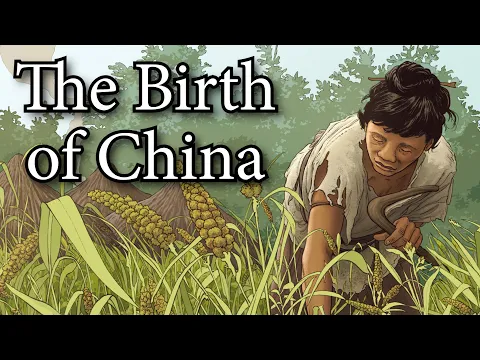
2. The Birth of China — Episode 1: Hunters on the Yellow River (20,000–7,000 BCE)
Long before China's great dynasties, imperial capitals and monumental tombs, the region was home to scattered communities of hunter-gatherers whose lives were closely connected to the natural environment. This episode of The Birth of China, produced by The Histocrat, takes viewers back to the Upper Palaeolithic and the millennia that preceded the development of farming communities in northern China. The creator describes the episode as an exploration of how hunter-gatherer groups gradually adopted more settled ways of life and began laying the foundations for plant and animal domestication.
The Yellow River is central to this story. Flowing through northern China, it became one of the great geographical influences on the development of Chinese civilisation. Its fertile surroundings supported human settlement, although the river's tendency to flood also created serious challenges for communities living along its banks.
The period covered by the video is particularly interesting because it encourages us to look beyond the conventional starting points of Chinese history. The Shang dynasty, traditionally dated from around the second millennium BCE, is associated with some of the earliest securely documented Chinese writing. Yet the communities that preceded it had already spent thousands of years adapting to changing climates, exploiting local resources and developing increasingly sophisticated ways of obtaining food.
The transition from hunting and gathering to farming was neither sudden nor uniform. Different groups adopted new practices at different times, and settled life developed through a long process of experimentation and adaptation. It would be misleading to imagine a single moment when people decided to abandon their old ways and become farmers.
This video offers an accessible introduction to those early developments and provides a useful counterpoint to documentaries that concentrate exclusively on emperors and dynasties. Civilisations do not emerge fully formed: their foundations are laid by generations of people whose names history has not preserved.
Watch: The Birth of China — Hunters on the Yellow River
3. The World's Oldest Shipwreck Found Off Türkiye?
Imagine setting out across the Mediterranean nearly five millennia ago, carrying a valuable cargo to an unfamiliar port. There are no satellite navigation systems, weather forecasts on a mobile phone or emergency services waiting nearby. If something goes wrong, the consequences can be catastrophic. A remarkable archaeological discovery off the southern coast of Türkiye offers a glimpse into this much more hazardous world of early seafaring.
Announced in October 2026, the wreck near Kekova Island has been described by researchers as the world's oldest known shipwreck. The surviving evidence dates to approximately 4,400–4,700 years ago, placing the vessel in the Early Bronze Age, around the period when the Great Pyramid of Giza was being constructed. Although the wooden hull has not survived, archaeologists have recovered more than 30 ceramic storage vessels and three stone anchors. Analysis suggests that the pottery originated in the Jordan Valley, providing evidence of maritime connections across the eastern Mediterranean.
The cargo is particularly important because it demonstrates that seaborne trade was already well established in the ancient world. Long before the classical Greek and Roman civilisations, communities were transporting goods across considerable distances, linking different regions through networks of exchange.
Researchers are also investigating the contents of the vessels. Residues may eventually help identify what the ship was carrying, while the pottery's design and manufacture can provide clues about where it originated and where it might have been heading. Possible destinations include the region associated with ancient Troy and the island of Crete, although the precise voyage remains uncertain.
The discovery is exciting, but the description world's oldest shipwreck deserves a qualification: it refers to the oldest known example currently identified, not necessarily the oldest vessel ever lost at sea. Much older wrecks may remain undiscovered, and dating ancient maritime sites can be challenging.
This is precisely what makes underwater archaeology so fascinating. A vessel that never reached its destination has become an extraordinary source of information about trade, technology and the lives of people who travelled the Mediterranean thousands of years ago.
Watch: The World's Oldest Shipwreck Found Off Türkiye — YouTube
4. History's Most Unimpressive Empires
History tends to remember empires at their greatest moments: vast territories, impressive armies, monumental architecture and rulers whose names survive for centuries. But not every empire lived up to its ambitions, and some political powers have left behind stories of overreach, poor leadership, short-lived conquests or spectacular failure. This video promises a lighter examination of the less impressive side of imperial history.
The subject offers plenty of opportunities for humour, but it also raises serious historical questions. What actually makes an empire successful? Is it the amount of territory controlled, the length of time it survives, the prosperity of its population or the influence it leaves behind? A state that conquers enormous territories may still prove unable to govern them effectively, while a smaller political power may exercise considerable influence through commerce, diplomacy or cultural exchange.
Empires have collapsed for many reasons. Some expanded beyond the limits of their administrative or military resources. Others suffered from succession disputes, internal divisions, economic pressures or the inability to respond to changing circumstances. In certain cases, decisions made by individual rulers accelerated an existing crisis; in others, structural weaknesses made eventual decline difficult to avoid.
It is worth remembering that historical failure rarely has a single explanation. A ruler who appears incompetent in retrospect may have faced circumstances that were difficult to anticipate, while an apparently successful empire may have depended on fragile arrangements that its leaders failed to recognise.
A video taking a humorous approach to the subject can be an enjoyable way to revisit familiar historical episodes and discover lesser-known examples. The key is to distinguish between a genuinely disastrous decision and a story that has been simplified for entertainment.
If this selection encourages viewers to investigate why particular empires rose and fell, it will have achieved something worthwhile. After all, history's failures can be every bit as instructive as its triumphs. And unlike the emperors involved, we have the advantage of knowing how the story ends.
Watch: History's Most Unimpressive Empires — YouTube
5. The Japanese Invasion of the United States During WWII
The title raises an intriguing question: how close did Japan come to invading the United States during the Second World War? The answer requires a distinction between attacks on American territory, plans for military operations and the much larger undertaking of launching a full-scale invasion of the continental United States.
Following the attack on Pearl Harbour on 7 December 1941, Japan rapidly expanded its military operations across the Pacific. Japanese forces captured territories throughout Southeast Asia and the western Pacific, while American leaders faced the challenge of protecting an enormous geographical area against an opponent that had prepared extensively for war.
Japan did carry out operations against American territory. In 1942, Japanese forces occupied parts of the Aleutian Islands in Alaska, including Attu and Kiska. Japanese submarines also shelled locations on the American west coast, and Japanese forces launched balloon bombs designed to cross the Pacific and cause damage or fires in North America. These incidents were very different in scale from an invasion designed to conquer the continental United States.
The geographical and industrial challenges facing Japan were formidable. The United States possessed enormous industrial capacity, extensive manpower and the resources required to sustain a prolonged war across the Pacific. An amphibious invasion of the American mainland would have required shipping, supplies, air support and a secure system of reinforcement on a scale that Japan could not realistically maintain.
Japan's strategic objective was not simply to occupy American territory. Its leaders hoped that rapid victories would establish a defensive perimeter, weaken American military power and eventually persuade the United States to accept a negotiated settlement. The attack on Pearl Harbour was intended to delay American intervention while Japan consolidated its conquests, although the strategy ultimately failed.
This video provides an opportunity to explore the difference between invasion fears and actual military capabilities. The Second World War produced numerous plans, proposals and speculative scenarios, but not all were practical or adopted as official policy.
The most interesting question may therefore be not whether Japan could have conquered the United States, but how Japanese leaders believed they could win a war against a country with such overwhelming long-term resources. The answer helps explain the strategic miscalculations that shaped the Pacific War.
Watch: The Japanese Invasion of the United States During WWII — YouTube
6. The Last Discoverer of America: Christopher Columbus
Christopher Columbus occupies a complicated place in world history. For generations, he was celebrated in many Western accounts as the European explorer who discovered America in 1492. Today, that familiar description is widely questioned because it overlooks the people who already inhabited the Americas and the earlier voyages that brought Europeans across the Atlantic.
Columbus was born in Genoa, probably in 1451, and became convinced that he could reach Asia by sailing west across the Atlantic. With the support of the Spanish monarchs Ferdinand and Isabella, he set out in August 1492 with three ships: the Niña, the Pinta and the Santa María. In October, his expedition reached islands in the Caribbean, where he encountered Indigenous peoples, including the Taíno.
Columbus believed he had reached the vicinity of Asia, not a previously unknown continent. Nor was he the first human being to reach the Americas: Indigenous peoples had lived throughout the region for thousands of years. Norse explorers had also reached parts of North America centuries before Columbus, with archaeological evidence at L'Anse aux Meadows in Newfoundland confirming a Norse settlement dating to around the year 1000.
Why, then, does Columbus remain so significant? His voyages initiated sustained contact between Europe and the Americas, opening the way for further European exploration, conquest, colonisation and the development of transatlantic trading networks. These encounters transformed societies on both sides of the Atlantic.
The consequences were profound and often devastating for Indigenous populations. European colonisation brought warfare, forced labour, dispossession and epidemic diseases that caused catastrophic population losses. Columbus himself played a role in the early colonial system established in the Caribbean, and his governorship has been associated with serious abuses.
The title's description of Columbus as the last discoverer is therefore an interesting invitation to reconsider the traditional narrative. Discovery depends on whose perspective is being considered, and the Americas were neither empty nor unknown to the people who lived there.
A worthwhile historical account should acknowledge both the navigational significance of Columbus's voyages and the human consequences that followed. His story is not simply one of exploration and adventure, but a turning point in global history whose effects continue to be debated today.
Watch: The Last Discoverer of America: Christopher Columbus — YouTube
Until Next Time
That’s a wrap for this week’s The History Dispatch. From ancient shipwrecks and buried Roman treasures to lost civilisations and the enduring mysteries of the past, one thing is clear: history still has plenty of stories left to tell.
We’ll be back next week with more discoveries, intriguing research and historical tales worth your time. Until then, keep curious, question the familiar, and remember — the past is never quite as settled as it seems.
Thanks for reading, and see you in the next dispatch!




Connect
Stay updated with my online activities.
CONTACT
NEWSLETTER:
Email Me via the Link Below:
© 2025. All rights reserved.